
ABA Therapy
Classroom-Based ABA Therapy in Houston and Cypress
June 17, 2026
Discover how a classroom-based approach helps children build real-world skills and succeed in school.
How Does It Actually Help a Child?
If you’re researching ABA therapy in Houston, you’re probably not just looking for a definition. You’re trying to figure out whether this is something that will truly help your child in everyday situations, not just in a therapy room.
ABA therapy, or Applied Behavior Analysis, focuses on helping children build meaningful skills over time. This includes communication, attention, behavior, and independence. Instead of expecting immediate change, skills are broken down into smaller, manageable steps and taught through repetition and positive reinforcement.
What makes the biggest difference is not just learning a skill, but whether a child can use that skill when the environment becomes more complex and more like real life.
Why Some ABA Therapy Doesn’t Translate Well to School
One of the most common frustrations families experience is seeing progress during therapy sessions but not seeing the same progress at school or in public settings.
This usually comes down to environment.
Commonly, ABA programs rely heavily on one-on-one sessions in quiet, controlled, small spaces. While that can be helpful for introducing new skills, children miss out on social skills because this environment deprives them of opportunities to learn the social skills that neurotypical children learn naturally in preschool or daycare settings.
These commonly practiced ABA settings don’t prepare children for the challenges they will eventually face. Classrooms are active and social, and while routines are predictable, many aspects are often unpredictable. Children need to learn amongst other children, focus on the teacher’s Instructions, which are not always repeated, and pay attention despite divided attention.
Therapy for Life focuses on providing robust opportunities each day to learn skills alongside peers, as well as ongoing opportunities to practice these skills in a more naturalistic, ABA-based school setting. Therapy For Life reduces instructor dependence and increases independence skills, which children will thrive on as they transition into school after graduating from ABA therapy.
How a Classroom-Based ABA Model Prepares Children for Real Life
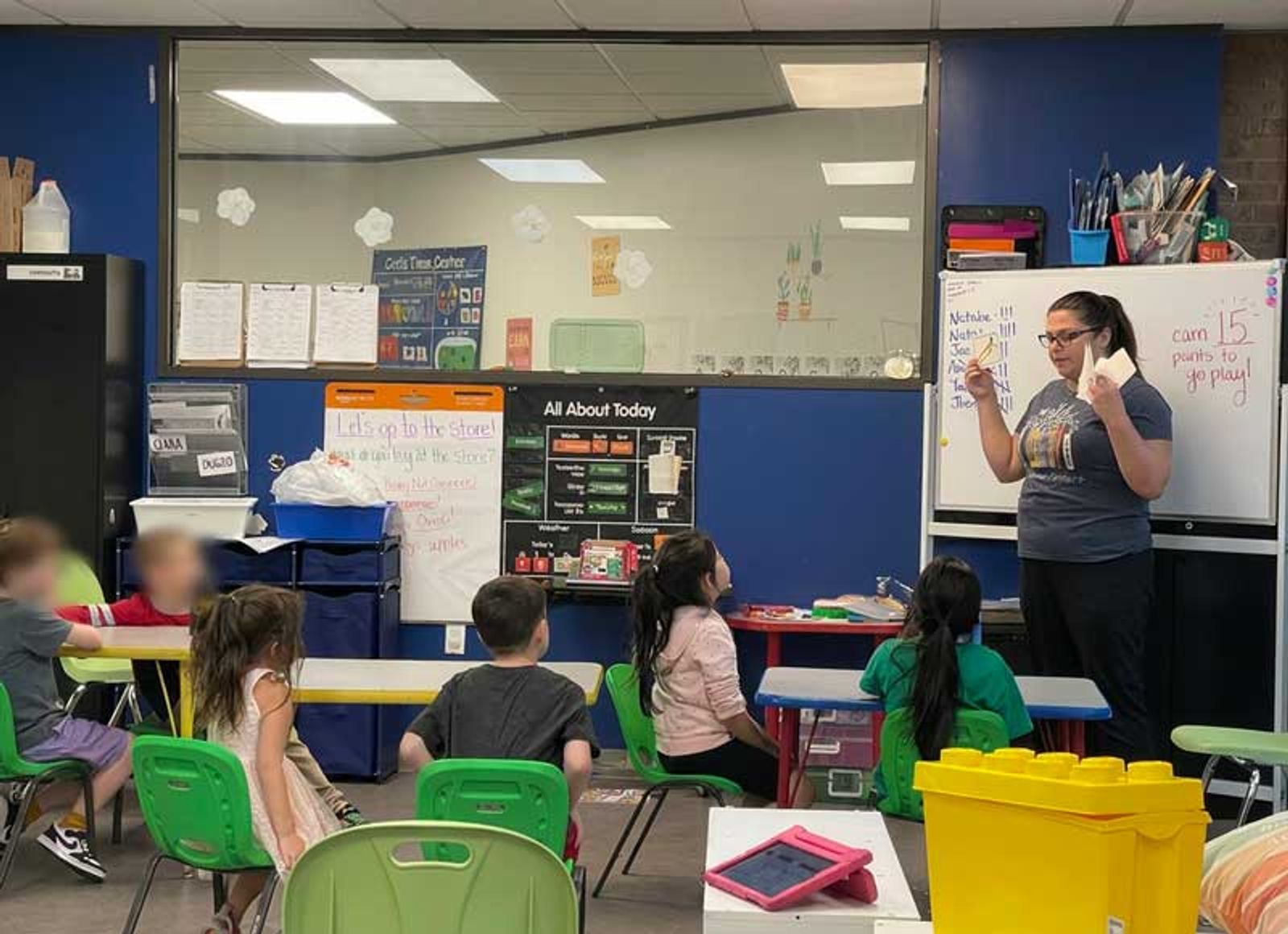
At Therapy For Life, ABA therapy is delivered in a classroom-style setting with expert BCBA supervision throughout their day, in their classrooms. The ABA-based classrooms are designed to resemble a real, traditional school environment. Children are not just learning skills; they are practicing them in real life every day.
They participate in group activities, respond to instructions from across the room, attend to their name when called from across the room, learn to complete task assignments, and learn to stay engaged even when distractions are present. They also learn how to transition between activities and follow routines that mirror a traditional school day.
Therapy For Life’s ABA approach helps reduce the gap between therapy and school by making learning more practical and transferable.
What Children Gain from ABA Therapy Beyond Behavior
ABA therapy supports much more than behavior. Children learn to communicate more clearly about more than just immediate needs, to have conversations, to follow directions, and to participate in structured and unstructured activities.
They also build social awareness by learning how to engage with peers, take turns, and respond appropriately in group settings. They also learn safety skills. These are essential skills that affect how a child experiences school and friendships, problem-solves, and handles changes in daily routines.
As these abilities improve, confidence often grows alongside them.
Why Learning to Learn Skills Matter
Learning to learn skills is the foundation for everything else.
These include maintaining attention, following instructions, transitioning between tasks, and staying engaged. Without these skills, even a strong academic ability can be difficult to access.
When children develop these skills in a classroom-style setting, they are better prepared to succeed in real school environments.
Individualized Support Within a Group Setting
Each child still receives individualized care with specific goals and one-on-one support. The difference is that those skills are also practiced in group settings.
This combination helps children not only learn a skill but also understand how to use it in different situations. That is what leads to lasting progress.
How ABA Therapy Works with Other Therapies
Speech Therapy - https://therapyforlife.com/speech-therapy/
Occupational Therapy - https://therapyforlife.com/occupational-therapy/
When therapies work together, children receive more consistent and connected support across all areas of development.
Take the Next Step
If you are looking for ABA therapy in Houston or Cypress (Bridgeland area) that focuses on real-world outcomes and school readiness, Therapy For Life offers an approach that supports both.
Start Your Child’s Journey With Us
Frequently Asked Questions
How do I know if ABA therapy is right for my child?
If your child struggles with speech, communication, behavior, attention, or participating in group settings, ABA therapy can help build those skills in a structured way.
What makes classroom-based ABA therapy different?
Children practice skills in an environment that mirrors the school setting, making it easier to apply them in real life.
Is ABA therapy only one-on-one?
No. It includes one-on-one therapy and group learning to help children generalize skills.
How long does ABA therapy take to show results?
Progress varies, but consistent practice in real environments leads to more meaningful results.